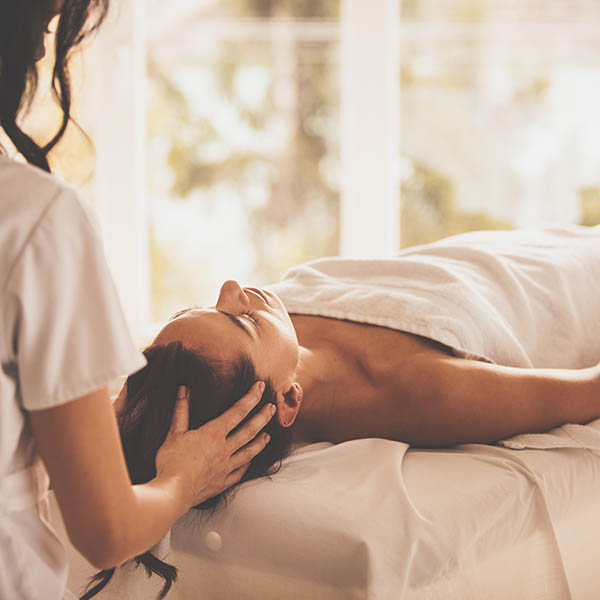
Japanese Head Spa is a premium scalp care ritual that merges intensive deep cleansing with restorative head and neck massage — delivering both physical rejuvenation and profound mental relaxation in a single, flowing treatment.
01What Is Japanese Head Spa?
Japanese Head Spa is a professional scalp care service that combines thorough, deep-cleansing shampoo techniques with specialized head, neck, and shoulder massage. Unlike a standard salon wash, it addresses the scalp as an extension of the skin, treating issues such as dryness, excess sebum, hair thinning, and tension-related hair loss through a structured therapeutic sequence.
The concept was born in Japan in the late 1990s, when pioneering salon owners sought to move beyond basic hair washing. Their goal was twofold: to purify the scalp with clinical precision and to deliver a deeply immersive relaxation experience — all within a single appointment.
At its core, Japanese Head Spa treats the scalp the same way a facial treats facial skin — with targeted cleansing, nourishment, and massage that address both aesthetic and wellness needs simultaneously.
Advertisement · Scroll to continue
02Cultural Origins
Head Spa sits at the intersection of two ancient wellness traditions. The first is Japan's revered Onsen (hot spring bathing) culture, which has long celebrated the healing power of mineral-rich water, mindful rituals, and the purification of both body and spirit.
The second influence is India's Ayurvedic tradition — specifically the practice of Shiro Abhyanga, a warm-oil scalp massage used for centuries to improve circulation, balance the body's energy systems, and promote calm.
Tokyo's trailblazing salons fused these two philosophies: they adopted the Onsen's mineral therapy principles and combined them with Ayurvedic massage strokes to create a holistic scalp treatment that restores physical balance while quieting the nervous system.
03History & Milestones
- Late 1990s — Birth in Japanese Salons Forward-thinking salon owners in Tokyo begin experimenting with structured scalp care sessions that go beyond standard shampoo services, laying the conceptual groundwork for what would become Head Spa.
- 2008 — Kyoto's Goku no Kimochi Kyoto launches the Head Spa movement into mainstream consciousness with Goku no Kimochi ("the finest feeling"), a dedicated scalp spa concept that captivates clients with its meditative atmosphere and precision techniques. Word spreads rapidly to Tokyo and Osaka.
- 2010s — National Expansion Head Spa services proliferate across Japan's major cities. Dedicated Head Spa studios — separate from conventional hair salons — emerge as a distinct wellness category.
- 2020–2024 — Global Discovery Viral videos of Japanese Head Spa sessions introduce the ritual to international audiences. Demand surges across South Korea, the United States, Europe, and Southeast Asia.
- 2025–2026 — Premium International Brands Established Japanese Head Spa brands leverage their reputation for refined technique to enter global markets, opening signature studios and licensing their methods to international wellness partners.
04Key Benefits of Head Spa
Head Spa delivers results across multiple dimensions of wellbeing — from visible scalp health to deeper neurological relaxation:
Deep Scalp Cleansing
Removes product buildup, excess sebum, and environmental pollutants that standard shampooing misses.
Nervous System Balance
Rhythmic massage activates the parasympathetic nervous system, shifting the body from stress response into restorative rest.
Advertisement · Scroll to continue
Improved Sleep Quality
Regular sessions help regulate cortisol levels and ease tension patterns that interfere with restful sleep.
Stress & Anxiety Relief
Targets the scalp's dense network of nerve endings, releasing chronic tension held in the head, neck, and shoulders.
Healthier Hair Growth
Stimulates microcirculation in the scalp, delivering oxygen and nutrients to hair follicles for stronger, thicker growth.
Scalp Condition Treatment
Addresses dryness, sensitivity, dandruff, and excess oil through targeted product selection and massage protocols.
05Head Spa Trends in 2026
The Head Spa category is evolving rapidly in 2026, blending time-honoured Japanese ritual with cutting-edge technology and a growing demand for evidence-based wellness:
- Tech
CO₂ Carbonated Scalp Therapy
Carbonated water and CO₂-infused serums boost blood circulation and remove impurities at a cellular level — one of the fastest-growing treatment upgrades in premium Head Spa studios worldwide. - Tech
Infrared & LED Light Therapy
Near-infrared light penetrates the scalp to stimulate follicle activity and reduce inflammation, while red-light LED supports collagen production in the scalp skin. - Nature
Botanical & Adaptogen Formulations
Studios are moving toward plant-derived serums featuring adaptogens (ashwagandha, reishi, ginseng) to support the scalp microbiome and reduce stress-triggered hair loss. - Ritual
Extended Multi-Sensory Experiences
Premium clients seek 90–120 minute rituals that layer aromatherapy, sound therapy, and temperature contrasts alongside traditional scalp massage — creating a meditative, full-sensory journey. - Diagnosis
AI-Powered Scalp Analysis
High-resolution scalp cameras paired with AI diagnostic tools allow therapists to customize treatments based on real-time data on follicle density, sebum levels, and scalp hydration.