Best Head Spa Routine
Before Bed
Your complete step-by-step evening guide to scalp massage, calming oils, and sleep-ready rituals — backed by clinical research
A good head spa routine before bed is one of the most effective — and most enjoyable — things you can do for your sleep. The right combination of techniques, oils and timing doesn't just feel relaxing; it measurably shifts your nervous system into rest mode, lowers stress hormones, and primes your body for deeper, more sustained sleep.
This guide gives you everything you need: the research-backed timing window, three protocol options to suit different lifestyles, a seven-step hands-on routine you can follow tonight, and the environmental details that make the difference between a routine that works and one that doesn't.
When to Do Your Head Spa Routine for the Best Sleep
Timing is the most commonly overlooked variable in a bedtime head spa routine. Do it too close to sleep and the stimulating sensation of massage can delay rather than assist sleep onset. Do it too early and the cortisol-lowering effects have plateaued before you lie down.
The Optimal Window
Begin your head spa routine 1–2 hours before your intended sleep time. This gives the parasympathetic nervous system enough runway to lower cortisol and heart rate to sleep-ready levels, so the transition into sleep feels effortless rather than forced.
Advertisement · Scroll to continue
Research from the Ntoumas et al. (2025) RCT used a 45-minute relaxation massage before bedtime and recorded a 10.8% improvement in sleep efficiency, measured by polysomnography. The Ivanova (2024) survey similarly found that massage evenings produced sleep onset approximately 6.2 minutes faster and total sleep approximately 39 minutes longer. Both protocols were conducted in the pre-bed window.
Three Head Spa Protocols — Choose What Fits Your Life
There is no single "correct" head spa before bed routine. The right protocol depends on how much time you have, whether you're doing it yourself or visiting a professional, and how stressed your nervous system is on any given evening. Here are three evidence-informed options:
| Protocol | Duration | Frequency | Best For | Key Notes |
|---|---|---|---|---|
| DIY Home Routine Self-administered | 10–15 min | 3–5 nights/week | Daily wind-down, maintenance, budget-friendly | Fingertip scalp massage, optional carrier oil with lavender. Sit or recline comfortably. Covers all 7 steps below. |
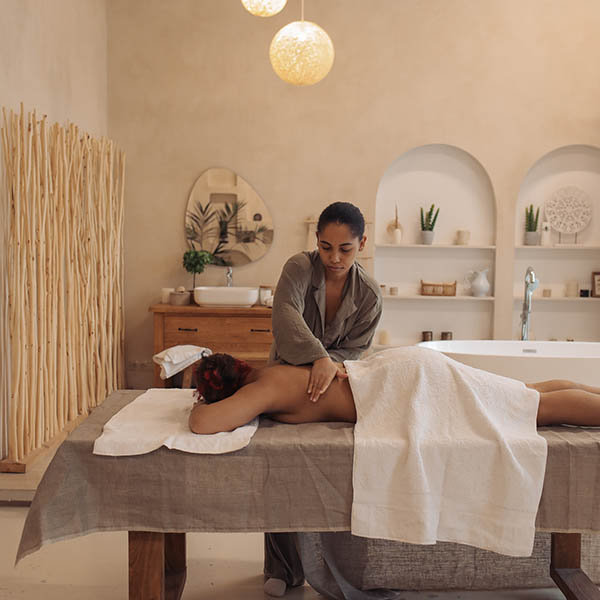
| Professional Head Spa Clinic visit | 45–60 min | 1–2 times/week | Deep reset, high-stress periods, maximum effect | Includes scalp cleanse, steam, herbal oil, and extended neck & shoulder massage. Schedule for late afternoon or early evening — not immediately before bed. |
| Pre-bed Mini Routine Nightly | 5–10 min | Every night | Habit formation, beginners, time-poor nights | Light effleurage, forehead-to-nape strokes, slow breathing. No oil required. Performed in bed or seated. Ideal for building the sleep-association cue. |
The 7-Step Evening Head Spa Routine
This is the core head spa routine before bed — the full DIY protocol built on clinical massage techniques. Follow all seven steps for the best result, or shorten to steps 3–5 on time-limited nights.
-
1Set the Environment 5 min before
Dim or extinguish overhead lights and switch off all screens at least 10 minutes before you begin. Blue-light exposure suppresses melatonin production, and beginning your evening head spa routine in a lit, stimulating room undermines the purpose. Choose soft lamp light, candlelight, or none at all. Put on slow instrumental music or nature sounds, or sit in silence.
Tip Keep your phone face-down and on do-not-disturb before you start. The ritual of preparation is itself a powerful nervous system signal. -
2Blend and Warm Your Oil 1–2 min
Mix 2–3 drops of lavender essential oil into one teaspoon of carrier oil — jojoba and sweet almond are both excellent for scalp use. Warm the blended oil by cupping it between your palms and rubbing gently for 10–15 seconds before applying. Cold oil on the scalp triggers a mild alerting response; warm oil encourages the parasympathetic shift you're aiming for.
Tip Inhale deeply from your cupped palms before application. This delivers the aromatherapy benefit through the olfactory system even before the massage begins. -
3Effleurage — Opening Strokes 2 min
Using your fingertips (not nails), apply slow, sweeping strokes from the hairline toward the crown and from the crown toward the nape. Use light to medium pressure — firm enough to feel, gentle enough to be soothing. This effleurage technique is the classical opening movement of therapeutic massage; it warms the scalp tissue, begins increasing local circulation, and makes the subsequent deeper work more effective.
Tip Match the rhythm of your strokes to your breath — one slow stroke per exhale. This synchronisation is one of the fastest ways to activate the vagus nerve. -
4Kneading — Tension Release 4–5 min
With fingers spread across the scalp, use a gentle kneading motion — lift slightly, press down, release — working methodically from the front hairline to the crown, then from the crown to the back of the head. The scalp contains numerous small muscles that accumulate tension during the day, particularly around the temples and the occipital ridge (where the skull meets the neck). Spend extra time on these areas; you will likely feel tightness releasing as you work.
Tip If you find any particularly tender spots, hold gentle sustained pressure for 8–10 seconds rather than moving past them — this is more effective than repeated rubbing. -
5Acupressure — Pressure Points 3 min
Apply sustained, gentle pressure to four key points: the temples (small circular motions), the GV20 point at the crown of the head (gentle downward pressure), the point between the eyebrows (Yintang — often called the "third eye"), and most importantly the GB20 points — two tender spots either side of the spine at the base of the skull. Hold each point for 8–10 seconds while breathing slowly. These points are associated with nervous system regulation, headache relief, and sleep promotion in traditional and integrative medicine.
Tip The GB20 points can be accessed by interlacing your fingers behind your head and using your thumbs to press upward toward the base of the skull. Most people experience an immediate sense of release. -
6Neck and Shoulder Release 3–4 min
Use both hands to gently knead the back of the neck — starting at the base of the skull and working downward toward the shoulders. Follow with slow, firm circular thumb pressure along the upper trapezius on each side. Research consistently identifies the neck and upper shoulders as primary sites of stress-related muscle tension, and this tension directly impairs sleep onset by maintaining a mild state of physical hyperarousal. Releasing it completes the body's transition to rest.
Advertisement · Scroll to continueTip Gently tilt your head forward as you work on the back of the neck — this creates natural traction that deepens the release without requiring additional pressure. -
7Closing Strokes and Breathwork 2 min
Return to gentle effleurage strokes across the entire scalp for 1–2 minutes, using progressively lighter pressure until you are barely touching the surface. Finish by placing both palms flat over your ears and holding for 30 seconds, eyes closed. Then complete five long, slow nasal breaths — inhale for four counts, hold for two, exhale for six. This 4-2-6 pattern activates the parasympathetic nervous system and consolidates the relaxation response, signalling to your body that rest is the next logical state.
Tip After your closing breath, resist the urge to look at your phone. Move directly to bed within 15–20 minutes to capture the cortisol trough at its deepest point.
Choosing the Right Oil for Your Bedtime Head Spa Routine
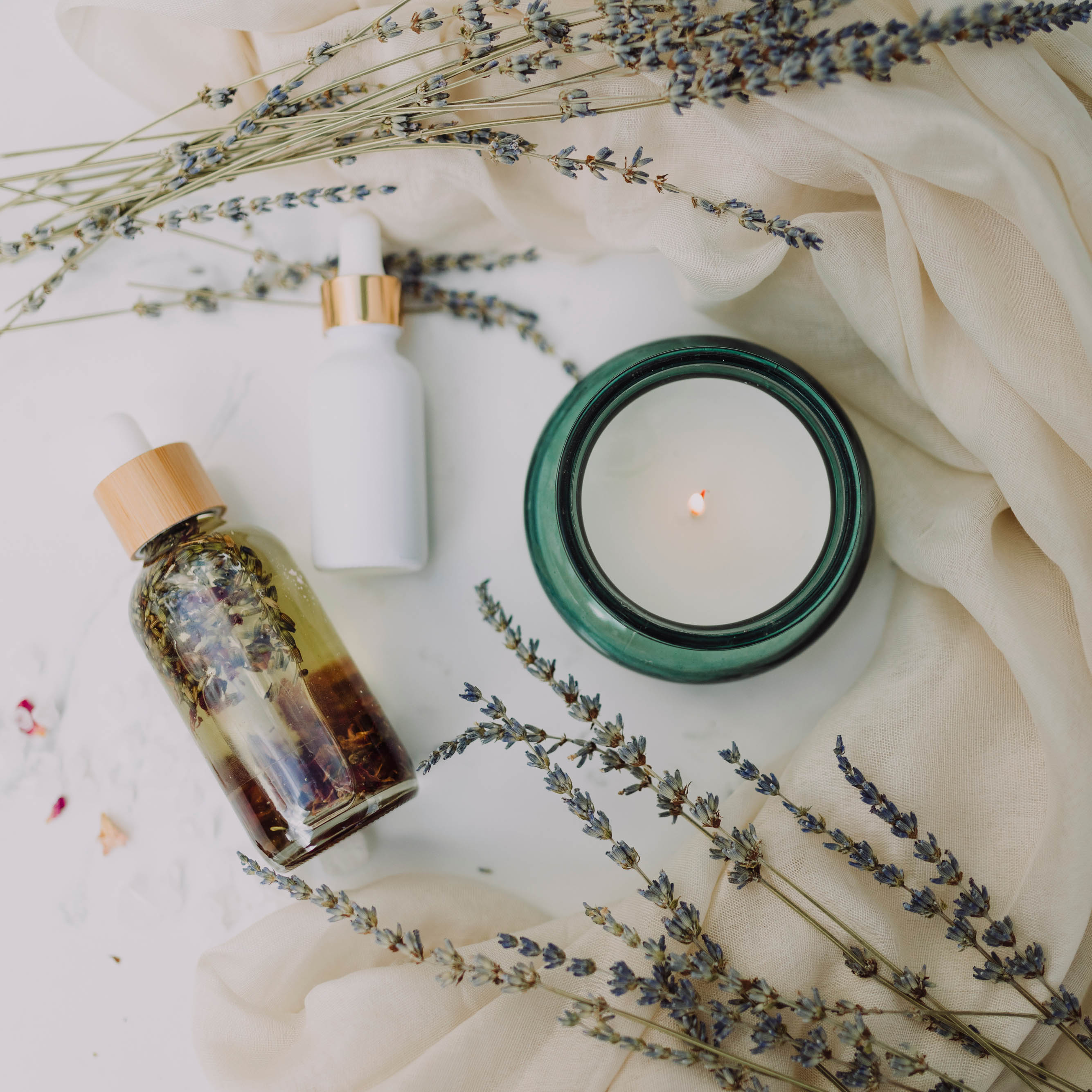
The oils you use in your pre-bed scalp massage are not merely cosmetic. The right combination of carrier and essential oils enhances the relaxation effect through aromatherapy and improves the quality of the massage by reducing friction and nourishing the scalp. Here is what to choose and why:
The most evidence-supported essential oil for sleep and anxiety. Reduces cortisol, promotes parasympathetic activation, and has been shown to decrease sleep latency. Use 2–3 drops per teaspoon of carrier.
Best for sleepCalming and mildly sedative. Works synergistically with lavender for deeper relaxation. Ideal for nights when stress or anxiety is elevated. Use 1–2 drops combined with lavender.
Anxiety nightsGrounding and warm. Particularly effective for racing thoughts and mental overactivity at bedtime. Has mild sedative properties and pairs beautifully with jojoba carrier oil.
Racing thoughtsUse only 1 drop with lavender, and only when tension headaches accompany stress. Peppermint is mildly stimulating — do not use as the primary oil for a bedtime routine.
Tension headachesCarrier Oils
Always dilute essential oils in a carrier. Jojoba oil is the closest in composition to the scalp's natural sebum and is absorbed without residue — the best choice for most people. Sweet almond oil is slightly richer and ideal for dry or sensitive scalps. Use one teaspoon of carrier per session. Never apply undiluted essential oil directly to the scalp.
Setting the Environment for Your Evening Head Spa Routine
The environment surrounding your head spa bedtime routine does as much work as the technique itself. Your nervous system takes cues from every sensory channel — light, sound, temperature, smell — and a well-constructed environment accelerates the shift from alertness to rest.
Lighting
Dim to warm candlelight or a low-lumen lamp below eye level. Overhead bright light suppresses melatonin; warm low light supports it.
Sound
Slow instrumental music (60–80 BPM), nature sounds, or silence. Avoid podcasts, news, or anything requiring active attention.
Temperature
A slightly cool room (18–20°C) signals to the body that sleep is appropriate. If using a warm towel on the scalp, let the room remain cool.
Screens
Off. Face-down. Do-not-disturb. This is non-negotiable — screen light and notification stress directly oppose the nervous system shift you are creating.
Advertisement · Scroll to continue
Towel (optional)
A warm damp towel applied to the scalp for 2–3 minutes before massage increases local circulation and enhances oil penetration. Microwave for 20 seconds in a damp condition.
Position
Seated upright with back support is best for self-massage. Lying down is fine for a partner-assisted routine or the closing breathwork phase.
Your Head Spa Before Bed — At a Glance
(optimal timing)
duration
best results
2–3 drops in carrier
as above
Integrating Your Head Spa Routine Into Broader Sleep Hygiene
A head spa routine for better sleep is most powerful when it forms part of a consistent pre-bed sequence rather than an isolated activity. The nervous system responds strongly to predictable cues — repeated actions in the same order at the same time become a conditioned signal for sleep onset over days and weeks.
Consider placing your pre-bed scalp massage within a broader 30–45 minute wind-down sequence: a warm shower or bath first (body temperature drop post-shower accelerates sleep onset), followed by your head spa routine, followed by reading in low light. Doing this at roughly the same time each night — even on weekends — reinforces your circadian rhythm and makes falling asleep progressively easier.
Clinical guidelines for insomnia consistently identify stimulus control and consistent pre-bed routines as among the most evidence-based non-pharmacological interventions available. Adding scalp massage before sleep enriches this routine with measurable physiological benefits: lower cortisol, activated parasympathetic tone, and reduced physical tension.
Frequently Asked Questions
Want the Full Sleep Science Picture?
Our main guide covers every mechanism — from cortisol reduction to melatonin — with all the clinical data in one place.
Read: Can Head Spa Improve Sleep?