Revive Head Spa Beauty · Sleep & Wellness
Can Head Spa Improve Sleep?
The Science-Backed Answer
Discover how therapeutic scalp massage lowers stress hormones, activates your parasympathetic nervous system, and helps you fall asleep faster — and what the clinical evidence actually shows.
improvement (RCT)
onset (survey)
after massage
increase (RCT)
If you've been lying awake at night, staring at the ceiling and willing your body to wind down, you're far from alone. Millions of Australians struggle with poor sleep — and many are searching for natural, non-pharmaceutical solutions. Enter head spa: a therapeutic ritual of scalp and head massage that, according to emerging clinical research, may genuinely help you sleep better.
But does the science actually support it, or is it just a wellness trend? In this comprehensive guide, we examine the physiological mechanisms, review the key clinical studies, and give you practical, evidence-informed advice on how to incorporate head spa into your bedtime routine.
"Preliminary evidence suggests that head spa techniques can produce relaxation effects — including reduced cortisol and increased parasympathetic tone — that may aid sleep onset and continuity."
Advertisement · Scroll to continue
What Is a Head Spa?
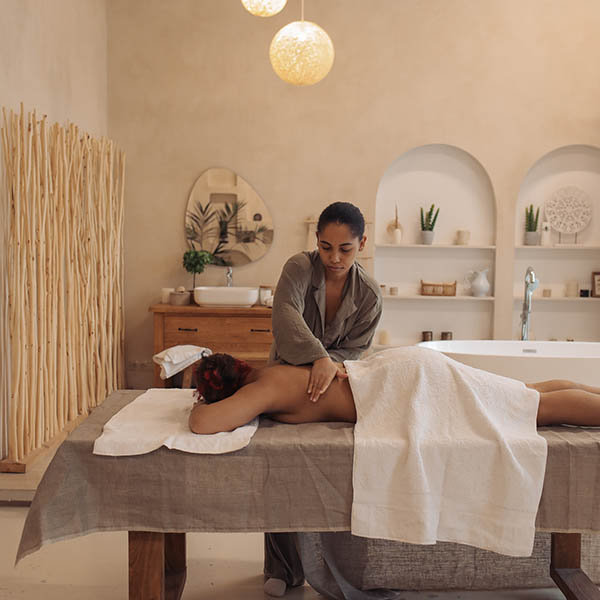
Head spa is a comprehensive scalp treatment with roots in East Asian salon culture. Unlike a standard shampoo or quick scalp rub, a proper head spa session is a deliberate ritual — typically spanning 30 to 60 minutes — that combines several therapeutic elements.
A full head spa session generally includes:
- Deep scalp cleansing — often with exfoliation to remove product buildup
- Warm herbal or essential oil application — lavender and peppermint are common choices
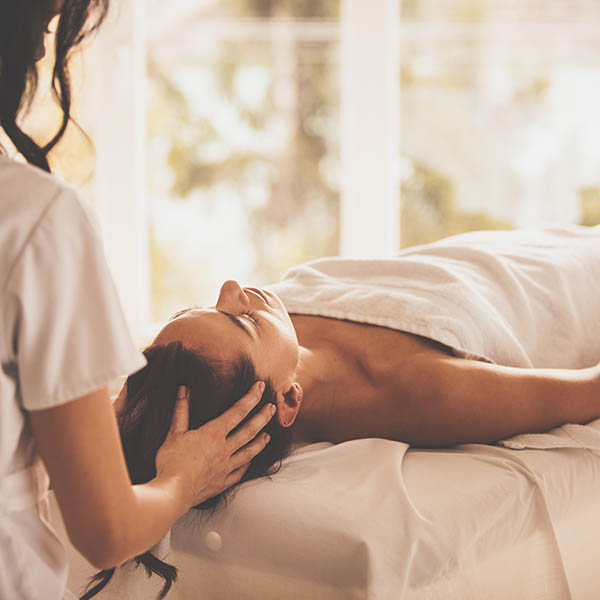
- Extended scalp massage — using effleurage (stroking), kneading, tapping, and acupressure
- Neck and shoulder massage — to release tension held in the upper body
- Steaming and scalp conditioning — to nourish the scalp and enhance absorption
The goal extends well beyond clean hair. Head spa emphasises the ritual of relaxation — deliberately activating the body's calming systems through sustained, intentional touch. This distinction is critical when understanding why it may influence sleep.
How Head Spa Promotes Sleep: 4 Key Mechanisms
Scientists have identified four primary pathways by which scalp and head massage may support better sleep. These aren't theoretical — each is supported by measurable physiological data.
Parasympathetic Nervous System Activation
Scalp massage stimulates sensory nerves — including trigeminal mechanoreceptors — increasing vagal (parasympathetic) tone. One RCT found just 10 minutes of head massage raised heart-rate variability by 66%, indicating a significant shift into the body's "rest and digest" state.
Fazeli et al. 2016Stress Hormone Reduction
Elevated cortisol causes hyperarousal — the wired, can't-switch-off feeling that keeps you awake. Regular scalp massage has been shown to significantly reduce both cortisol and norepinephrine levels compared to controls, lowering this arousal barrier.
Kim et al. 2016Melatonin & Neuroendocrine Effects
Advertisement · Scroll to continue
Increased vagal tone from touch stimulation may signal the pineal gland to produce more melatonin — your body's primary sleep hormone. While direct adult evidence remains limited, the stress-reduction pathway indirectly supports melatonin's sleep-promoting action.
Emerging evidenceCortical Arousal Reduction (EEG)
Massage appears to lower brain arousal, making the transition to sleep easier. PSG (polysomnography) data from a 2025 RCT showed that relaxation massage before bed shortened sleep latency — the time it takes to reach Stage 1 sleep — at a statistically significant level (p = 0.037).
Ntoumas et al. 2025What Does the Research Say?
The evidence base for head spa and sleep includes randomised controlled trials (RCTs), observational studies, and large surveys. Here is a summary of the key findings:
Summary of Key Studies
| Study | Design & n | Intervention | Key Finding |
|---|---|---|---|
| Ntoumas et al. (2025) | RCT crossover, n=20 Adults with insomnia |
45-min relaxation massage at bedtime vs. sham vs. control | +10.8% sleep efficiency Sleep latency ↓ (p=0.037). Sustained sleep +6 min (p=0.005). |
| Ivanova (2024) | Survey, n=72 Healthy volunteers |
Self-reported massage sessions (30–90 min) | +39 min total sleep Sleep onset 6.2 min faster. Self-rated quality improved. |
| Fazeli et al. (2016) | RCT crossover, n=10 Healthy adults |
10-min head massage vs. no-touch (crossover) | +66% heart-rate variability Heart rate ↓ (p<0.01). Significant parasympathetic activation. |
| Kim et al. (2016) | RCT, n=34 Healthy office women |
Scalp massage 15–25 min, twice weekly for 10 weeks | ↓ Cortisol & NE (p<0.05) Significant reduction in stress hormones and blood pressure. |
Note: All studies had small sample sizes. Findings are promising but should be interpreted as preliminary.
How Strong Is the Evidence?
It's important to be honest about what the research does — and doesn't — prove. The findings are genuinely encouraging, but the overall quality of evidence remains moderate. Here's how the key outcomes stack up:
Evidence Strength by Outcome
The primary limitation is small sample sizes — most trials involved fewer than 25 participants per arm. A 2025 review noted that the Ntoumas trial was, to the best of its authors' knowledge, the first study to evaluate the acute effects of head massage specifically for sleep. That fact alone underscores how novel this research area remains.
That said, the underlying physiological mechanisms are well-established — we understand exactly why massage would lower cortisol and activate the parasympathetic nervous system. The missing piece is large, pre-registered RCTs that confirm these effects translate reliably into clinical sleep improvements at scale.
Ready to Experience Better Sleep
Through Head Spa?
Our therapists are trained in evidence-informed techniques designed to activate your parasympathetic nervous system and help you unwind deeply before sleep.
Book a SessionFrequently Asked Questions
Yes — preliminary clinical evidence suggests it can. A 2025 RCT found that a 45-minute relaxation massage before bedtime improved sleep efficiency by approximately 10.8% compared to a control condition, with statistically significant reductions in sleep latency. A 2024 survey of 72 participants found sleep onset was 6.2 minutes faster and total sleep was 39 minutes longer on massage nights. While sample sizes are small, the findings are consistent and supported by clear physiological mechanisms.
Scalp massage activates the parasympathetic ("rest and digest") nervous system by stimulating sensory nerve endings in the scalp and neck. This increases heart-rate variability, lowers heart rate, reduces cortisol and norepinephrine (stress hormones), and decreases cortical arousal — all of which help the body transition naturally and more quickly into sleep.
Advertisement · Scroll to continue
A DIY scalp massage of 10–15 minutes, performed 3–5 nights per week, is a practical starting point. Studies using twice-weekly scalp massage over 10 weeks demonstrated significant reductions in stress hormones. For maximum benefit, aim for at least one longer professional head spa session (45–60 minutes) per week, with shorter nightly self-massage sessions in between.
The direct evidence for massage increasing melatonin in adults is limited. Some researchers suggest that increased vagal tone from touch stimulation may signal the pineal gland to secrete more melatonin. However, a reflexology study found no significant change in salivary melatonin. Indirectly, by reducing cortisol and lowering arousal, massage creates the physiological conditions that support natural melatonin secretion.
Absolutely. A simple DIY routine — using your fingertips to apply gentle circular pressure on the scalp, temples, and nape of the neck for 10–15 minutes — is effective and easy to do at home. You can optionally apply a few drops of a calming essential oil such as lavender (diluted in a carrier oil) to enhance the relaxation effect. Perform your routine 1–2 hours before bed as part of a consistent wind-down ritual.
No. Head spa should be considered a complementary tool, not a primary treatment for clinical insomnia. Evidence-based treatments like Cognitive Behavioural Therapy for Insomnia (CBT-I) remain the gold standard. That said, head spa can be a valuable adjunct — reducing physiological arousal and supporting the relaxation needed to make other sleep strategies more effective. Always consult a healthcare provider for persistent sleep disorders.
Explore the Full Guide Series
Deep-dive into every aspect of head spa and sleep with our complete article series.
References
- Ntoumas et al. (2025). The Impact of Relaxation Massage Prior to Bedtime on Sleep Quality and Quantity in People with Symptoms of Chronic Insomnia: A Home-Based Sleep Study. ResearchGate
- Ivanova (2024). The Effect of Massage Therapy on the Sleep Quality in Healthy Adults. ResearchGate
- Fazeli et al. (2016). The Effect of Head Massage on the Regulation of the Cardiac Autonomic Nervous System: A Pilot Randomized Crossover Trial. ResearchGate
- Kim et al. (2016). The Effect of a Scalp Massage on Stress Hormone, Blood Pressure, and Heart Rate of Healthy Female Office Workers. ResearchGate
- Quattrin et al. (2006). Evaluation of Anxiety, Salivary Cortisol and Melatonin Secretion Following Reflexology Treatment: A Pilot Study in Healthy Individuals. ScienceDirect
- Field T. (2014). Massage therapy research review. Complementary Therapies in Clinical Practice. Semantic Scholar.