Hair Spa vs Head Spa: What's the Difference and Which One Do You Actually Need?
If you've ever searched for a spa treatment to address your hair or scalp concerns, chances are you've come across both "hair spa" and "head spa" — and found yourself wondering whether they're simply two names for the same thing. They're not. While the two treatments share some surface-level similarities, they are fundamentally different experiences with distinct goals, techniques, and outcomes. Understanding these differences is the first step to choosing the treatment that will genuinely benefit you.
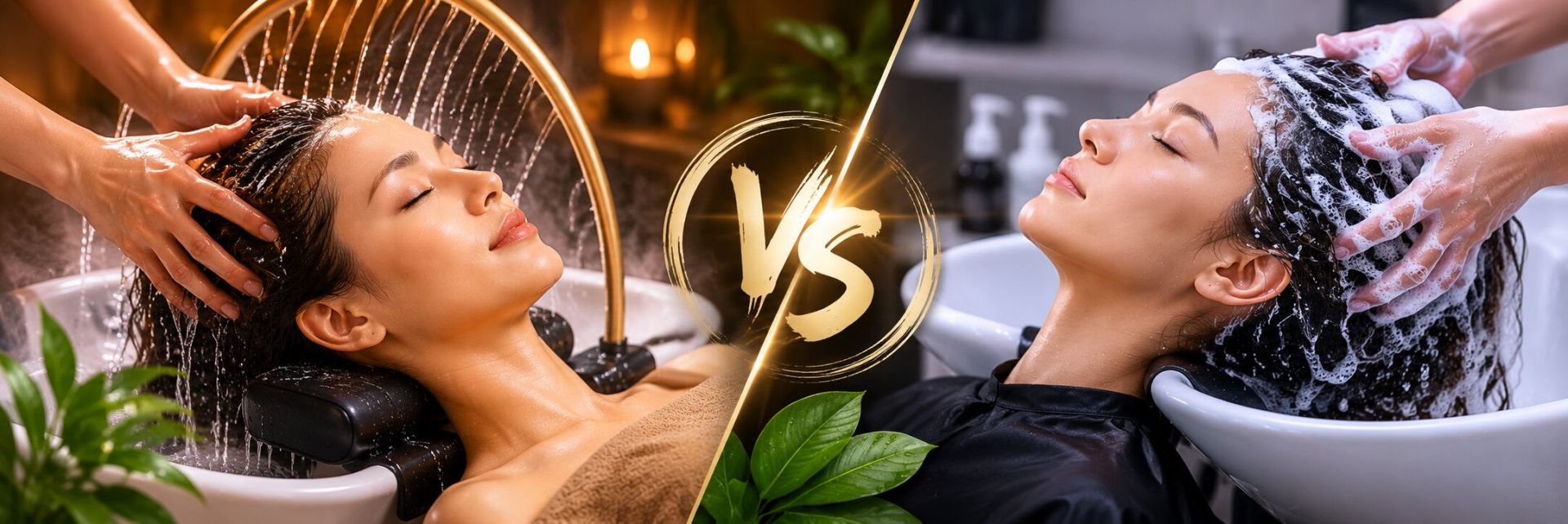
In recent years, the head spa concept has surged in popularity across Australia, particularly as people become more conscious of scalp health as the foundation of long-term hair wellness. Meanwhile, hair spas have remained a staple offering in traditional salons, focused on restoring shine, softness, and strength to the hair shaft itself. Both have their place — but they are not interchangeable.
This guide breaks down hair spas and head spas across nine key criteria: treatment goals, affected areas, procedures, products used, techniques, benefits, suitable audience, recommended frequency, and overall service experience. By the end, you'll have a clear, expert-informed picture of which treatment aligns with your needs — and why the distinction matters far more than most people realise.
At a Glance: Hair Spa vs Head Spa — The Core Difference
The simplest way to understand the distinction is this: a hair spa treats the hair strand, while a head spa treats the scalp and the overall health of the head environment. One is primarily cosmetic and conditioning; the other is therapeutic and wellness-focused. A hair spa asks, "How can we make your hair look and feel better right now?" A head spa asks, "What does your scalp need to support healthy, long-term hair growth and mental wellbeing?"
Advertisement · Scroll to continue
✂️ Hair Spa
- Focuses on the hair shaft and strands
- Primarily cosmetic and restorative
- Deep conditioning and moisture-sealing
- Addresses damage, dryness, frizz
- Common in hair salons
- Results are visible immediately
🌿 Head Spa
- Focuses on the scalp and head as a system
- Therapeutic, wellness-focused
- Scalp detox, circulation, and relaxation
- Addresses buildup, hair loss, stress
- Found in dedicated spa settings
- Cumulative benefits build over time
1. Treatment Goals
The treatment goals of a hair spa and a head spa reflect two entirely different philosophies. A hair spa is designed to rehabilitate and beautify the hair fibre itself. The overarching goal is to repair damage caused by heat styling, chemical treatments, environmental exposure, or neglect — restoring moisture, elasticity, shine, and manageability to the hair shaft. Think of it as intensive moisturising and protein therapy for your hair.
A head spa, particularly in its Japanese-inspired form, operates with a much broader therapeutic mandate. The primary goal is to optimise the health of the scalp — the living skin beneath your hair — and by extension, to support the conditions under which healthy hair can naturally grow. Secondary goals include stimulating blood circulation to the follicles, relieving tension in the head, neck, and shoulder muscles, detoxifying the scalp of product buildup and sebum, and promoting deep mental relaxation. A head spa treats the root cause; a hair spa treats the visible result.
2. Affected Areas
This is perhaps the clearest physical distinction between the two treatments. A hair spa exclusively targets the hair strands — from mid-shaft to ends. Practitioners focus on the parts of your hair you can see and touch: the cortex and cuticle layers of each strand. Masks, serums, and conditioners are applied along the lengths and ends, where damage is most apparent. The scalp itself receives minimal attention during a traditional hair spa.
A head spa, by contrast, treats the scalp as its primary canvas. Practitioners work directly on the skin of the scalp — massaging, exfoliating, cleansing, and nourishing it at the follicle level. Depending on the style of treatment (Japanese, Korean, or Chinese-influenced), the service may also extend to acupressure points on the head, temples, and neck, and in many premium offerings, the shoulders and upper back as well. The hair itself is cleansed and often conditioned as part of the process, but it is never the focus.
3. Procedures and Steps
A typical hair spa session follows a straightforward sequence: initial hair assessment, pre-treatment oil or serum application, deep conditioning mask treatment (often under steam or heat for penetration), a scalp massage (brief, and focused more on product distribution than therapeutic stimulation), rinse, and finish styling. The entire process is product-driven and usually takes between 45 and 90 minutes in a salon chair.
A head spa procedure is considerably more layered. A well-structured session — such as those modelled on the Japanese head spa protocol — typically begins with a scalp analysis (often using a microscopic camera to assess sebum levels, follicle health, and buildup), followed by a pre-cleanse scalp oil massage to loosen debris, a deep scalp cleanse using specialised shampoos, an extended and deliberate massage sequence targeting pressure points and muscle groups, application of scalp-specific serums or ampoules, and often a finishing rinse under a specialised shower or "rain" system that enhances sensory relaxation. The experience is holistic, sequential, and therapeutic — closer to a medical-grade wellness treatment than a salon service.
4. Products Used
The product philosophy of each treatment reflects its focus. Hair spas rely on cosmetic-grade hair care: deep conditioning masks rich in proteins (keratin, hydrolysed silk, collagen), moisturising butters (shea, argan, coconut), and emollients that coat and seal the cuticle. Heat protection serums, bond-repair treatments (such as Olaplex-type systems), and glossing agents are also common. These products are formulated to adhere to the hair shaft and deliver visible cosmetic improvements — softness, shine, and reduced frizz.
Head spa products target the scalp's biological needs. You'll typically see enzyme-based or salicylic acid exfoliants to dissolve dead skin and sebum, botanical scalp serums designed to stimulate follicular activity and reduce inflammation, scalp-specific shampoos with a lower pH to balance the scalp's microbiome, and nourishing treatment ampoules containing ingredients like ginseng, caffeine, biotin, or peptides to support hair growth. Aromatherapy oils — peppermint, tea tree, rosemary — are also common, chosen not just for their cosmetic properties but for their demonstrated physiological effects on circulation and relaxation. If you're curious about specific product approaches used in different cultural traditions, our comparison of Korean head spa treatments in Sydney and Korean head spa services in Melbourne offers a helpful regional overview.
5. Treatment Techniques
Technique is where the experiential gap between the two treatments becomes most apparent. A hair spa is largely passive — the client sits while products are applied and processed. The massage component in a hair spa is typically a light effleurage (surface-level stroking) to stimulate product distribution, lasting perhaps five to ten minutes and lacking the intentional therapeutic sequencing of a proper head massage.
Advertisement · Scroll to continue
A head spa is built around technique. The massage sequences used in Japanese head spas, for instance, draw on centuries of Eastern wellness traditions — incorporating shiatsu-style acupressure to specific points along the head's meridian lines, deep kneading movements to release tension held in the galea aponeurotica (the connective tissue across the skull), and lymphatic drainage strokes along the neck and occipital region. Scalp exfoliation techniques also vary by tradition: some practitioners use fingertip circular movements to physically lift dead skin cells; others employ brush tools, ultrasonic devices, or pressurised water systems. These are skilled, intentional techniques — not incidental steps in a product treatment.
Experience a Genuine Head Spa in Adelaide
If you're in South Australia and curious to experience what a true therapeutic head spa feels like — not just a product treatment at a salon — Revive – Head Spa & Beauty at 103B Jetty Road, Glenelg SA 5045 offers a full Japanese-influenced head spa experience designed around scalp health, deep relaxation, and lasting hair wellness. It's a meaningful step beyond the typical hair spa.
Explore Our Services6. Benefits
The benefits of a hair spa are real and immediately noticeable — but they are surface-level and temporary without consistent maintenance. After a hair spa, clients typically experience softer, smoother, and more manageable hair; reduced frizz and improved elasticity; restored shine on dull or colour-treated strands; and a temporary reduction in split ends and breakage. These results generally last two to four weeks before the hair reverts to its previous state, especially without a supportive at-home care routine.
Head spa benefits operate on multiple dimensions simultaneously. At the physiological level, regular head spa treatments can improve scalp circulation (supporting nutrient delivery to follicles), reduce excessive sebum production or scalp dryness, address dandruff and flaking at the source, and create the scalp environment most conducive to healthy hair growth. At the neurological level, the extended massage and sensory relaxation of a head spa has been shown to reduce cortisol levels, ease tension headaches, improve sleep quality, and promote a measurable sense of calm. Unlike a hair spa, the benefits of head spa are cumulative — each session builds on the last, and the improvements to hair health become more pronounced over time. For a broader look at the range of services available across the country, see our guide to the best head spas in Melbourne.
7. Suitable Audience
A hair spa is most beneficial for people whose primary concern is the condition of their hair strands. It's an excellent option for those with chemically treated, heat-damaged, or colour-processed hair that has become dry, brittle, or porous. It suits clients who want an immediate cosmetic improvement — softer, shinier, more manageable hair — without a lengthy or complex treatment experience. It's also a reasonable starting point for someone new to in-salon hair care who isn't yet dealing with significant scalp issues.
A head spa is the better choice for anyone experiencing scalp-related concerns: persistent dandruff or flaking, oily or congested scalp, hair thinning or noticeable hair loss, product buildup that regular shampooing doesn't clear, or an itchy, sensitive, or inflamed scalp. It's also strongly recommended for people managing high levels of stress or tension — the relaxation component alone is worth the visit. Those who have prioritised hair wellness and overall relaxation in 2026 consistently report that the head spa experience delivers results that no cosmetic hair treatment can replicate. It is also ideal for individuals who are proactively investing in long-term hair health rather than just reactive damage repair.
8. Recommended Frequency
The frequency of hair spa treatments depends largely on the degree of damage and the client's maintenance habits. For those with heavily processed or damaged hair, a hair spa every three to four weeks is typically recommended during a repair phase. Once the hair reaches a healthy baseline, monthly or bi-monthly sessions are usually sufficient for maintenance. It's important to note that overuse of heavy conditioning masks — particularly protein-based ones — can lead to protein overload, resulting in stiff, brittle hair, so frequency should always be guided by a professional assessment.
Head spa frequency is generally recommended at four to six week intervals for clients with active scalp concerns. Those using it primarily for relaxation and maintenance can visit every six to eight weeks and still experience meaningful cumulative benefits. Unlike hair spas, there is little risk of overuse with head spa treatments — the scalp responds well to consistent attention. Many clients who begin with monthly sessions to address a specific concern (such as hair thinning) choose to continue on a maintenance schedule indefinitely once they experience the full range of benefits.
9. The Service Experience
The experience of these two treatments is fundamentally different in atmosphere, intention, and aftereffect. A hair spa is primarily a salon service — efficient, product-focused, and oriented around a visible aesthetic outcome. The environment is typically a busy salon floor; the conversation is likely to be practical and product-oriented; and the end goal is beautiful-looking hair you'll feel confident walking out with. It is a treatment that serves your hair's appearance.
A head spa is a holistic wellness experience. Premium head spa venues — particularly those drawing from Japanese traditions — cultivate an environment of calm: low lighting, ambient sound, skilled and deliberate touch, and an unhurried pace that encourages the nervous system to genuinely downregulate. Clients often describe a state of deep relaxation during the treatment and a heightened sense of mental clarity and calm for hours or even days afterward. The head spa experience is not just about your hair — it is about your whole self. For those in Adelaide's eastern suburbs seeking this kind of experience, our guide to Japanese head spas in Norwood is a useful resource.
Side-by-Side Comparison Table
| Criteria | Hair Spa | Head Spa |
|---|---|---|
| Treatment Goal | Repair and condition the hair strand; restore shine and softness | Optimise scalp health, stimulate follicles, promote relaxation |
| Affected Areas | Hair shaft (mid-lengths and ends) | Scalp, follicles, head, neck, sometimes shoulders |
| Key Procedures | Oil pre-treatment, conditioning mask, steam, light massage, rinse | Scalp analysis, deep cleanse, therapeutic massage, serum application, specialised rinse |
| Products Used | Protein/moisture masks, bond-repair serums, glossing agents | Enzyme exfoliants, scalp serums, botanical ampoules, pH-balanced shampoos |
| Techniques | Product application, light effleurage, heat processing | Acupressure, deep kneading, lymphatic drainage, scalp exfoliation |
| Primary Benefits | Softer, shinier, more manageable hair; reduced frizz and breakage | Healthier scalp microbiome, improved circulation, reduced stress, hair growth support |
| Best For | Damaged, dry, colour-treated hair; cosmetic improvement | Scalp issues, hair thinning, stress, long-term hair wellness |
| Frequency | Every 3–4 weeks (repair); monthly (maintenance) | Every 4–6 weeks (concern-based); every 6–8 weeks (maintenance) |
| Experience | Salon-based, efficient, cosmetically focused | Spa environment, therapeutic, holistic, deeply relaxing |
Can You Have Both?
Absolutely — and in fact, combining both treatments in a strategic routine is often the most effective approach for people managing multiple concerns. If you're dealing with both scalp issues (oiliness, buildup, or sensitivity) and visibly damaged hair (from bleaching, heat, or chemical processing), a head spa addresses the root cause while a periodic hair spa helps manage the cosmetic damage at the strand level. Many premium spas now offer hybrid treatments that incorporate elements of both, though it's worth asking your practitioner which combination makes sense for your specific hair and scalp profile.
The key is understanding that these are complementary, not competing, services. Think of the head spa as your long-term wellness investment and the hair spa as your short-term cosmetic tool. Used together with a thoughtful at-home routine, the results can be genuinely transformative — not just aesthetically, but in how your hair feels, grows, and responds over time.
Advertisement · Scroll to continue
Visiting Glenelg, South Australia?
Located steps from the beach at 103B Jetty Road, Glenelg SA 5045, Revive – Head Spa & Beauty offers a curated menu of scalp-focused head spa treatments, designed with both your hair health and overall wellbeing in mind. Whether you're new to head spas or looking to continue a regular wellness routine, our team can help you find the right approach.
Book a Treatment at ReviveFrequently Asked Questions
Q: Is a head spa the same as a hair spa?
A: No — they are distinct treatments with different goals. A hair spa focuses on conditioning and repairing the hair strands, while a head spa focuses on cleansing, nourishing, and therapeutically treating the scalp. A head spa also incorporates extended massage sequences that target muscle tension and circulation, making it a more holistic wellness experience rather than a purely cosmetic one.
Q: Which treatment is better for hair loss?
A: A head spa is the more appropriate choice for addressing hair thinning or loss. Hair loss typically originates at the scalp level — from poor circulation, clogged follicles, hormonal factors, or chronic stress — and a head spa directly addresses these root causes through scalp massage, detoxification, and targeted serum application. A hair spa treats the existing strands but does not influence follicular activity or address the causes of hair loss.
Q: Can I get a head spa if I have colour-treated hair?
A: Yes, most head spa treatments are suitable for colour-treated hair. In fact, the scalp care component of a head spa can be particularly beneficial for those who colour regularly, as chemical processing can disrupt the scalp's natural pH and microbiome. Always inform your practitioner of any recent colour treatments so they can select appropriate products and avoid techniques that could affect colour longevity.
Q: How long does each treatment take?
A: A standard hair spa session typically runs between 45 and 90 minutes, depending on hair length and the depth of conditioning required. A head spa is generally longer — most quality treatments run between 60 and 120 minutes, with premium Japanese-style sessions sometimes extending further to allow for a full massage and therapeutic ritual. The additional time in a head spa reflects the complexity and intentionality of the treatment.
Q: How soon will I see results from each treatment?
A: Hair spa results are immediate and visible — softer, shinier hair is noticeable as soon as the treatment is complete. Head spa results are more nuanced: you will likely notice improved scalp comfort and significant mental relaxation straight away, but the hair growth and long-term scalp health benefits become more apparent after two to four consistent sessions over several weeks. Both treatments offer real value; the timescale of their benefits simply differs.
Final Thoughts
The confusion between hair spas and head spas is understandable — they share a similar vocabulary and are often offered in overlapping contexts. But once you understand that one treats the strand and the other treats the scalp, the decision becomes much clearer. If you want immediately softer, more manageable hair, a hair spa delivers. If you want to address the health of the scalp that produces your hair — and in the process enjoy one of the most relaxing wellness treatments available — a head spa is the right choice.
As awareness of scalp health continues to grow across Australia, more people are making the shift from reactive hair treatments to proactive scalp wellness. The top head spas across the country are responding to this shift with increasingly sophisticated treatment menus, and the standard of care continues to rise. Whichever treatment you choose, the most important step is to seek out a skilled practitioner who can assess your individual needs and recommend the approach that will serve you best — not just today, but in the long run.