Can Scalp Massage
Increase Melatonin?
The serotonin–melatonin pathway, the cortisol brake, and what clinical evidence actually says about head spa and your sleep hormone
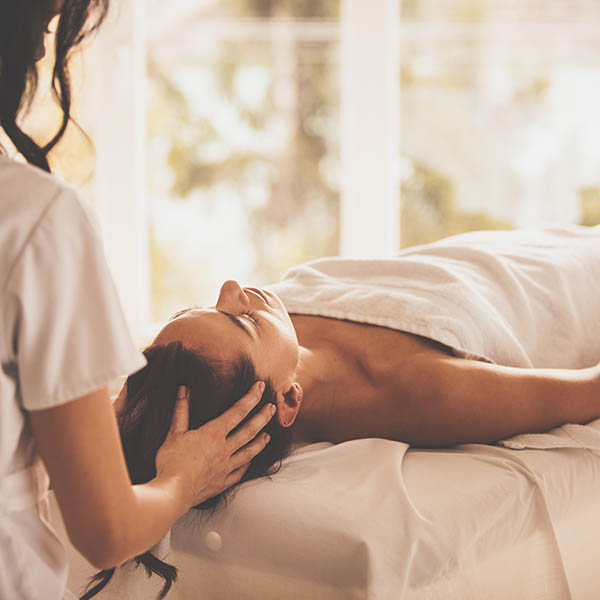
Melatonin is the hormone that tells your body it is time to sleep — but your body doesn't make it on demand. It is built, step by step, from a chain of biochemical events that begins with touch, stress, and the state of your nervous system. Understanding that chain explains exactly why scalp massage and melatonin are more connected than most people realise.
This article follows the science precisely: from the tactile stimulation of a head spa through to the pineal gland's nocturnal melatonin surge, with every link in the chain explained and evidenced. If you've ever wondered whether a scalp massage can increase melatonin — the answer requires understanding a pathway rather than a simple yes or no.
The short answer is yes — and by the end of this article you'll understand exactly how and why.
What Is Melatonin and Why Does It Matter for Sleep?
Melatonin is a hormone produced primarily by the pineal gland, a small structure deep in the brain. Unlike cortisol — which your body can release rapidly in response to stress — melatonin production is gradual, rhythmic, and exquisitely sensitive to context. It begins rising approximately two hours before your natural sleep time, peaks in the middle of the night, and falls back to near-zero by morning.
Advertisement · Scroll to continue
Its primary function is not to cause sleep directly, but to act as a biological signal of darkness — communicating to every cell in the body that night has arrived and rest should follow. It lowers core body temperature, suppresses alertness signals, and prepares the brain for the transition through sleep stages.
What disrupts this precise nocturnal rise? Two things above all else: artificial light at night (which the pineal gland misreads as daytime) and elevated cortisol (the stress hormone, which directly suppresses pineal activity). Both are extremely common in modern life — and both are addressable through a well-timed head spa routine.
The Serotonin–Melatonin Pathway: How Scalp Massage Fits In
To understand how scalp massage increases melatonin, you first need to understand the biochemical chain that produces it. Melatonin is not synthesised from scratch — it is converted from serotonin, which itself is synthesised from the amino acid tryptophan. Every step in this chain matters.
The pineal gland converts serotonin to melatonin through two enzymatic steps — first to N-acetylserotonin, then to melatonin — triggered by darkness. This conversion only happens at night, which is why the timing of your scalp massage for sleep matters: boosting serotonin during the day or early evening gives the pineal gland more raw material to work with when the conversion window opens after dark.
This is the critical insight: scalp massage does not directly produce melatonin. Instead, it elevates the serotonin baseline that the pineal gland draws on when synthesising melatonin at night. The more serotonin available — and the less it is blocked by cortisol — the stronger the nocturnal melatonin signal.
What the Research Actually Shows
The evidence connecting massage therapy to serotonin and melatonin is not theoretical — it has been measured directly in clinical trials. The most comprehensive data comes from Field et al. (2005), whose meta-analysis synthesised findings across 37 massage therapy studies.
Across studies, massage therapy produced significant increases in serotonin levels — the direct biochemical precursor to melatonin that the pineal gland converts at night.
+28% Average serotonin increase vs. baselineCortisol — the hormone that directly suppresses pineal gland melatonin synthesis — was simultaneously reduced. Removing this suppression amplifies the melatonin production effect.
−31% Average cortisol reduction post-massageThis study directly measured urinary melatonin levels before and after a massage intervention in a breast cancer population, finding significantly elevated melatonin alongside improved sleep quality.
Advertisement · Scroll to continue
It is important to contextualise these findings accurately. The Field et al. meta-analysis covered a broad range of massage types — not exclusively scalp massage — though tactile stimulation of the scalp and head activates the same mechanoreceptor and autonomic pathways. The Hernandez-Reif melatonin study used full-body massage on a specific clinical population. What the evidence establishes is the mechanism; the application to head spa scalp massage is a well-supported inference from that mechanism rather than a finding from a dedicated head-spa-specific melatonin trial.
The Cortisol Brake: Why Stress Destroys Your Melatonin Signal
Perhaps the most practically important link in this chain is the one most commonly overlooked: cortisol's direct suppression of melatonin production. This is not a loose association — it is a precise biochemical antagonism.
"Elevated cortisol at night functions as a direct brake on the pineal gland — suppressing the enzymatic activity that converts serotonin to melatonin, regardless of how much serotonin is available."
This means that stress doesn't just make you feel awake — it chemically prevents your body from producing the sleep hormone it needs, even if your serotonin baseline is healthy. The two-pathway action of scalp massage — raising serotonin and lowering cortisol simultaneously — addresses both sides of this problem at once.
Kim et al. (2016) demonstrated this in a randomised controlled trial: twice-weekly scalp massage over 10 weeks produced statistically significant reductions in both cortisol and norepinephrine (p < 0.05). Crucially, blood pressure also dropped — a systemic sign that the parasympathetic nervous system genuinely took over, rather than simply creating a subjective feeling of relaxation.
When you remove the cortisol brake and simultaneously raise serotonin levels, you are creating the best possible biochemical conditions for a strong nocturnal melatonin surge.
Two Pathways, One Outcome: How Head Spa Supports Melatonin
The effect of head spa on melatonin production operates through two distinct but complementary pathways. Understanding both clarifies why the practice is more powerful than either mechanism alone would suggest.
- Scalp mechanoreceptors stimulated by massage
- Parasympathetic nervous system activated
- Serotonin synthesis and release increased
- Larger serotonin pool available to pineal gland
- Stronger melatonin signal produced at night
- HPA axis activity reduced by tactile input
- Cortisol and norepinephrine levels fall
- Pineal gland enzymatic suppression lifted
- Conversion of serotonin → melatonin unblocked
- Earlier, deeper melatonin rise achieved
Both pathways are activated simultaneously during a head spa scalp massage. Pathway A (supply) ensures there is more serotonin to convert. Pathway B (demand) ensures the conversion machinery is not being suppressed by cortisol. The two effects are additive — and their combined impact on melatonin availability is greater than either alone.
Timing Your Head Spa for Maximum Melatonin Benefit
Because scalp massage supports melatonin through the serotonin pathway rather than directly, timing is meaningful. The goal is to elevate serotonin and reduce cortisol at a point in the evening that aligns with the natural onset of melatonin synthesis — and to avoid the alerting effect of stimulating massage immediately before bed.
Cortisol natural decline begins
The body's diurnal cortisol rhythm starts descending. Afternoon stress, screens, and work can delay this. A professional head spa at this time is ideal for resetting the decline.
Optimal window: DIY head spa routine
Best timing for a 15–20 minute home scalp massage. Cortisol is descending, screens can be dimmed, and you have 2–3 hours before sleep for the serotonin elevation to peak and begin conversion.
Melatonin synthesis begins rising
In a low-cortisol, high-serotonin state, the pineal gland begins its melatonin conversion in earnest. A 5–10 minute mini-routine at this time reinforces the parasympathetic state without overstimulating.
Melatonin peak window: sleep onset
Melatonin levels are now significantly elevated. If cortisol was reduced and serotonin raised earlier in the evening, sleep onset should feel natural, faster, and less forced than on high-stress evenings.
Advertisement · Scroll to continue
Melatonin absolute peak
The body's melatonin concentration reaches its 24-hour maximum. A well-supported melatonin curve — built on the earlier evening pathway activation — means more time in deep slow-wave and REM sleep.
The practical upshot: perform your head spa routine for melatonin support in the 7–9 pm window — roughly 1–2 hours before intended sleep. This is consistent with findings from Ntoumas et al. (2025), whose 45-minute pre-bed massage intervention produced a 10.8% improvement in sleep efficiency measured by polysomnography.
Practical Protocol: Making Scalp Massage Work for Melatonin
Applying this science practically requires three variables to be right: technique, timing, and consistency. The table below summarises the evidence-informed parameters for using head spa to support melatonin production.
| Variable | Recommendation | Why It Matters for Melatonin | Evidence Base |
|---|---|---|---|
| Timing | 1–2 hours before sleep (7–9 pm) | Serotonin elevation peaks in alignment with melatonin synthesis window; cortisol trough deepens by sleep onset | Ntoumas et al. (2025); circadian biology literature |
| Duration | 15–25 min (DIY); 45–60 min (professional) minimum threshold | Sub-10-minute sessions show weaker HPA-axis effects; 15+ min produces measurable cortisol reduction in most studies | Kim et al. (2016); Field et al. (2005) |
| Frequency | 3–5× per week (DIY); 1–2× (professional) | Cumulative serotonin and HRV improvements are strongest with repeated sessions; single-session effects are real but smaller | Kim et al. 10-week protocol; Field meta-analysis |
| Technique | Effleurage → kneading → acupressure → breathwork | Combines mechanical stimulation of scalp receptors with vagal breathing to maximise parasympathetic activation | Fazeli et al. (2016) HRV study; general massage therapy literature |
| Oil | Lavender (2–3 drops in jojoba carrier) | Lavender aromatherapy has independent evidence for reducing cortisol and supporting sleep onset — compounds the massage effect | Aromatherapy sleep literature (Koulivand et al., 2013) |
| Environment | Dim warm light; no screens; 18–20°C room | Light suppresses melatonin directly; screen stimulation raises cortisol. Environmental control protects the melatonin synthesis window the massage opens | Circadian biology; sleep hygiene guidelines |
| Consistency | Minimum 4 weeks; optimum 8–10 weeks | Serotonin baseline rises cumulatively; the nervous system learns the sleep-association cue, making the cortisol reduction faster and deeper over time | Kim et al. (2016) 10-week RCT outcome data |
What to Combine Your Head Spa With for the Strongest Melatonin Signal
Scalp massage for melatonin works best as part of a coordinated evening approach. Several additional practices act on the same serotonin–cortisol–melatonin pathway and compound the effect of your head spa routine:
Morning Sunlight Exposure
Serotonin synthesis is stimulated by bright light exposure, particularly in the morning hours. Getting 10–20 minutes of natural morning sunlight — without sunglasses — significantly boosts daytime serotonin, giving the pineal gland a larger serotonin pool to draw on that night. Combined with evening scalp massage, this morning habit creates a powerful 24-hour rhythm in your favour.
Screen Curfew (at Least 60 Minutes)
Blue-wavelength light from screens directly suppresses the pineal gland's melatonin synthesis independent of cortisol. The most common reason a well-timed head spa melatonin routine underperforms is screen use immediately afterward. The massage opens the melatonin window; screen light closes it again. A 60-minute screen curfew aligned with your head spa session protects the signal you have created.
Tryptophan-Rich Evening Snack (Optional)
Tryptophan is the amino acid the body uses to synthesise serotonin. A small tryptophan-rich snack — a few walnuts, warm milk, or a small serve of turkey — in the early evening supports the upstream supply to the serotonin–melatonin pathway. This is an optional addition, not a requirement, but it is physiologically consistent with the same pathway that scalp massage acts on.
Consistent Sleep and Wake Times
Melatonin production is anchored to circadian rhythm. Irregular sleep timing shifts the melatonin curve unpredictably, reducing its amplitude. Consistent waking — even on weekends — keeps the rhythm stable and makes the melatonin signal produced with the help of your head spa routine more predictable and potent.
What the Evidence Doesn't Yet Establish
- No large-scale RCT has tested scalp massage specifically as an isolated intervention for melatonin measurement. The evidence chain is built from massage-therapy-to-serotonin studies, serotonin-to-melatonin biochemistry, and one general massage-to-melatonin trial. The pathway is well-supported; the head-spa-specific data is inferential.
- Individual variation in serotonin metabolism and pineal sensitivity is significant. The protocol described here will work to varying degrees across different people, ages, and health conditions.
- If you have a diagnosed sleep disorder, melatonin deficiency, or are currently taking medications affecting serotonin (including SSRIs), consult your GP before using this as a primary intervention. Head spa is a complementary tool, not a clinical treatment.
- The melatonin effect is cumulative, not immediate. Expecting a dramatic difference after a single session sets an unrealistic benchmark — the clinical improvements in research protocols emerged over 4–10 weeks of consistent practice.
Frequently Asked Questions
The Full Picture on
Head Spa & Sleep
This article covers one piece of a larger story. Our main guide brings together every mechanism — melatonin, cortisol, serotonin, HRV, sleep architecture — with all the clinical data in one place.