
BIAB vs Acrylic Nails: A Full Comparison for 2026
If you have spent any time scrolling nail inspiration lately, you have almost certainly seen the debate: BIAB or acrylic, which one is actually better? Both promise strong, long-lasting nails, both can be shaped and shined to look flawless, and both have loyal fans who will not switch back. But underneath the surface, they are quite different products with different effects on your natural nails, your wallet, and your weekly routine.
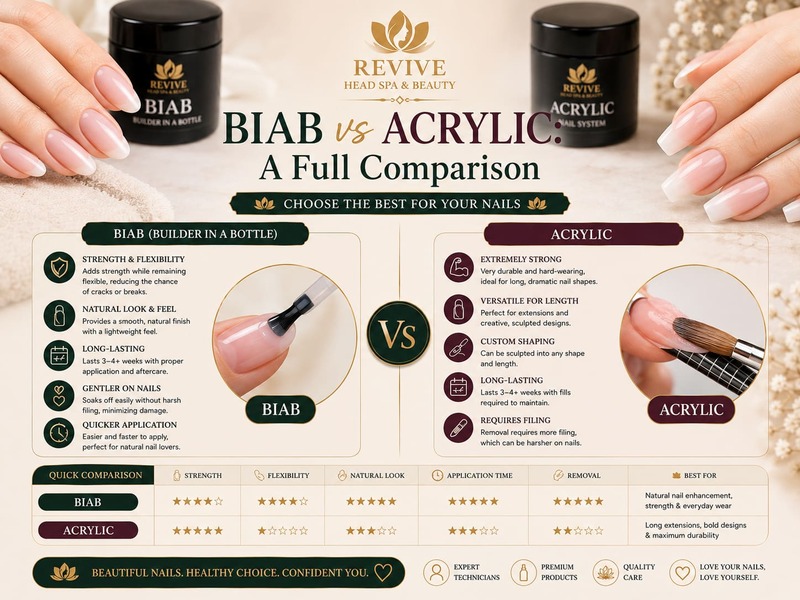
This guide breaks down BIAB (Builder in a Bottle) and traditional acrylic side by side, covering application, durability, cost, nail health, removal, and the overall wear experience. If you are new to BIAB altogether, our complete guide to BIAB nails is a good place to start before diving into this comparison.
By the end, you should have a clear sense of which option fits your lifestyle, your nail goals, and how much maintenance you are actually willing to commit to.
What Is BIAB?
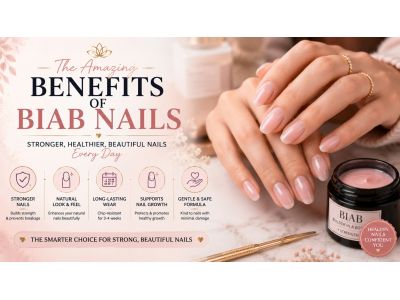
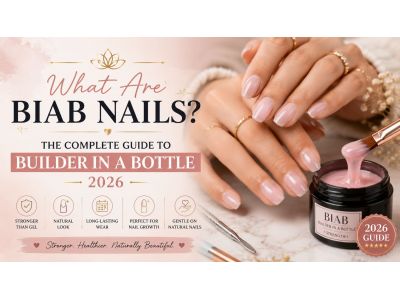
BIAB stands for Builder in a Bottle, a soak-off gel-based product applied in thin layers directly onto the natural nail or over a tip extension. It cures under an LED or UV lamp between coats and builds a flexible, resin-like layer that reinforces the nail without adding significant bulk. Many technicians describe it as a hybrid between a gel polish and an acrylic overlay, since it strengthens the nail while still feeling relatively light and natural. We cover the specifics of how this product behaves on the nail plate in our BIAB overlay explained article, and the reasons people are switching to it in the benefits of BIAB nails.
Advertisement · Scroll to continue
Because BIAB is soak-off and gel-based, it tends to be gentler during removal than acrylic, and it is often recommended for people who want strength without the weight or thickness associated with older-style acrylic sets.
What Is Acrylic?
Acrylic nails use a liquid monomer combined with a powder polymer, mixed by the technician into a bead that is shaped onto the nail or a tip extension. The mixture hardens through a chemical reaction rather than curing under a lamp, which is one of the fundamental differences between the two systems. Once set, acrylic forms a hard, durable shell that has been the industry standard for extensions and strengthening for decades.
Acrylic is prized for its strength and its ability to be sculpted into dramatic shapes and lengths, which is why it remains popular for extensions, competition nails, and clients who want maximum durability regardless of nail thickness.
BIAB vs Acrylic: Side-by-Side Comparison
| Factor | BIAB | Acrylic |
|---|---|---|
| Base product | Soak-off gel, cured under LED/UV lamp | Liquid monomer + powder polymer, air-cured |
| Feel on the nail | Lightweight, flexible, close to natural nail | Harder, thicker, more rigid shell |
| Best for | Strengthening natural nails, subtle length | Dramatic extensions, maximum durability |
| Odour during application | Minimal | Noticeable chemical smell |
| Removal method | Soaked off in acetone | Filed down, then soaked or drilled |
| Typical lasting time | 3–4 weeks | 3–4 weeks, sometimes longer with fills |
| Impact on natural nail | Generally gentler with correct removal | Can weaken nails if removed incorrectly |
As the table shows, the two products are closer in lasting power than most people expect. The real differences show up in how each one feels day to day, and in what happens to your natural nails over months of repeat appointments.
Application Process Compared
A BIAB application usually starts with light shaping of the natural nail, followed by thin layers of gel painted on and cured under a lamp between each coat. There is no mixing, no monomer, and very little odour, which makes the whole process feel closer to a gel manicure than a traditional extension service. Appointments typically run 60 to 90 minutes depending on whether length is being added.
Acrylic application involves a technician dipping a brush into liquid monomer and then into powder polymer, forming a bead that is placed and shaped on the nail before it hardens on its own. This requires more skill to sculpt evenly and tends to produce a stronger chemical smell in the salon. The process can take a similar amount of time, though intricate extensions or competition-style sets may take longer.
Durability & Lifespan
Both BIAB and acrylic can comfortably last three to four weeks with proper care, though acrylic has traditionally had a reputation for being the tougher, more chip-resistant option, particularly for people who work with their hands or have an active lifestyle. BIAB has closed much of that gap in recent years as formulas have improved, and its flexibility actually helps it resist cracking under pressure rather than chipping outright.
Regardless of which product you choose, how you care for your nails between appointments matters just as much as the product itself. Our BIAB aftercare guide covers the daily habits that help either system last as long as possible.
Nail Health & Long-Term Impact
This is where the two products tend to diverge most in client experience. Because BIAB is thinner, more flexible, and soaks off rather than requiring aggressive filing, it generally places less stress on the natural nail plate over repeated applications. Many people who have struggled with weak, damaged nails from years of acrylic wear find that switching to BIAB gives their nails a chance to recover while still enjoying some added strength and shine.
Advertisement · Scroll to continue
Acrylic is not inherently damaging when applied and removed correctly by a trained technician, but the risk of over-filing during removal is higher, and incorrect at-home removal can thin the natural nail considerably. The health outcome really comes down to technique and whether removal is done properly rather than rushed.
Cost Comparison
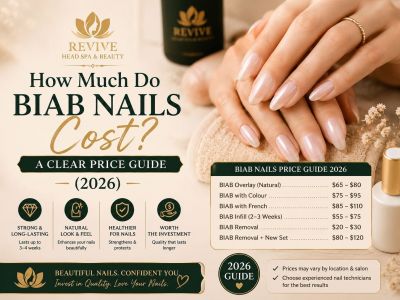
Pricing for both services varies by salon, location, and whether you are adding length or simply strengthening your natural nails. In general, BIAB and acrylic sit in a similar price bracket for a basic set, though acrylic extensions with intricate shaping or added length can push the price higher due to the extra time and product involved. For a detailed breakdown of what to expect to pay, see our dedicated BIAB nails cost guide.
It is also worth factoring in the cost of fills or rebalances every three to four weeks, since both systems require regular maintenance to look their best and to protect the natural nail underneath.
Removal Process: Which Is Gentler?
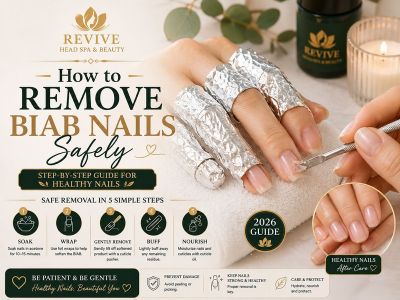
BIAB is designed to soak off in acetone, typically wrapped in foil for around 10 to 15 minutes before gently easing the product away. Done correctly, this is one of the gentlest removal processes available for a strengthened nail system. We walk through the full process, including what not to do at home, in how to remove BIAB nails safely.
Acrylic removal usually involves filing down the bulk of the product first, then soaking or using an e-file to lift the remainder. This process demands a steady, experienced hand, because filing too aggressively is the single most common cause of nail thinning and damage associated with acrylic wear.
Look & Feel: Which Suits Your Style
BIAB tends to suit people who want their nails to look and feel close to natural, just stronger, shinier, and more even. It is a popular choice for those who want a subtle, polished manicure rather than an obviously "done" look, and it works particularly well over natural nail length rather than dramatic extensions.
Acrylic remains the go-to for anyone chasing longer, more sculptural shapes, sharp coffin or stiletto tips, or intricate 3D nail art that needs a sturdy base to sit on. If length and structure are the priority, acrylic still has the edge in versatility.
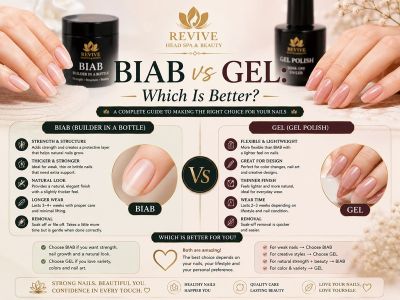
How Does BIAB Compare to Gel?
BIAB is often confused with standard gel polish, but the two are not the same thing, and the difference matters when deciding between systems. If you are also weighing up gel as an option, our comparison on BIAB vs gel nails breaks down where each one fits.
Which One Should You Choose?
If your natural nails are on the weaker side and you want reinforcement without heavy bulk, BIAB is generally the more forgiving choice, especially over a longer stretch of regular appointments. If you are after significant length, dramatic shaping, or you simply prefer the classic acrylic feel and have healthy nails underneath, acrylic remains a solid and reliable option.
Neither product is objectively "better" in every situation. The right choice depends on your current nail condition, how much length you want, your budget, and how gentle you need the removal process to be.
Curious to Try BIAB for Yourself?
If you are in South Australia and want to experience a professional BIAB application done with care, Revive – Head Spa & Beauty at 103B Jetty Road, Glenelg SA 5045 offers BIAB nail services alongside our signature head spa and beauty treatments. We also put together a local shortlist in the best places to get BIAB in Adelaide if you would like to compare options nearby.
Explore Our ServicesFrequently Asked Questions
Q: Is BIAB stronger than acrylic?
A: Acrylic is generally the harder, more rigid product, but BIAB's flexibility means it resists cracking under pressure. For everyday strength on natural-length nails, BIAB often performs just as well, while acrylic still holds an edge for long extensions.
Advertisement · Scroll to continue
Q: Which one damages your nails more?
A: Neither product is inherently damaging when applied and removed correctly. Most nail damage from either system comes from improper removal, particularly over-filing acrylic, rather than from the product itself.
Q: Can I switch from acrylic to BIAB?
A: Yes, many people transition from acrylic to BIAB to give their natural nails a break while still keeping some strength and shine. It is worth letting your technician know your nail history so they can assess condition before applying BIAB.
Q: Does BIAB last as long as acrylic?
A: Both typically last three to four weeks with proper care and a fill or rebalance. Lasting power depends more on application quality and aftercare than on which product you choose.
Q: Which is better for nail extensions, BIAB or acrylic?
A: Acrylic is usually the better choice for significant length or dramatic shaping, since it forms a harder, more structural base. BIAB can add modest length but is best suited to strengthening and subtle extensions rather than long, sculptural tips.
Final Thoughts
BIAB and acrylic both have a clear place in modern nail care, and the "better" option really comes down to what your nails need and what look you are going for. If you want light, natural-feeling strength with a gentler removal process, BIAB is likely the better fit. If you are after serious length, sculptural shapes, or maximum durability, acrylic still holds its own.
Whichever system you choose, booking with an experienced technician and following proper aftercare will make the biggest difference to how your nails look and feel over time.