
How to Remove BIAB Nails Safely
BIAB, or Builder in a Bottle, is designed to be tough. That's exactly what makes it such a popular choice for anyone wanting strong, natural-looking nails that hold up to daily life. But that same durability means removal needs to be handled carefully. If you've followed our complete guide to BIAB nails, you'll already know that BIAB bonds closely to the natural nail plate, which is fantastic for wear time but means the removal process matters just as much as the application.
Removing BIAB the wrong way, whether that's picking, prying, or filing too aggressively, can strip away layers of your natural nail and leave it thin, weak and prone to breaking. Removing it the right way protects your natural nail underneath and sets you up nicely for your next set. This guide walks through the proper soak-off method step by step, what to avoid, and how to look after your nails once the BIAB is off.
Whether you're planning to have a fresh set reapplied straight away or want to give your nails a short break, the same safe removal principles apply.
Advertisement · Scroll to continue
Why BIAB Requires a Specific Removal Process
Unlike some nail systems that can be gently peeled or popped off, BIAB is formulated to bond firmly with the nail plate, which is part of what gives it such good structural strength and long wear. This strong bond is a benefit while you're wearing it, but it also means it won't come off with a quick soak in the way that some polishes will. Removal requires acetone to break down the product gradually, along with some gentle filing to help the acetone penetrate.
Attempting to remove BIAB by picking, peeling, or prying it off with a metal tool is one of the most common causes of nail damage that nail technicians see. Because the product is bonded so closely to the nail, forcing it off usually takes several layers of the natural nail along with it, leaving the nail bed thin, rough and sometimes painful for weeks afterwards.
What You'll Need for a Safe Soak-Off
Tools for a proper at-home soak-off:
- 100% pure acetone (not acetone-free polish remover, which won't break down BIAB effectively)
- A coarse nail file or buffer block
- Cotton balls or pads
- Aluminium foil, cut into small squares
- A cuticle stick (orange stick or metal cuticle pusher)
- Cuticle oil and hand cream for aftercare
If you don't have these items on hand or you'd simply rather not deal with the process yourself, booking a professional removal is always the safer option, particularly if it's been a while since your last fill or if you've noticed any lifting.
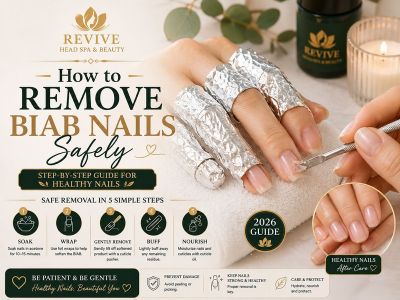
Step-by-Step: How to Remove BIAB Safely
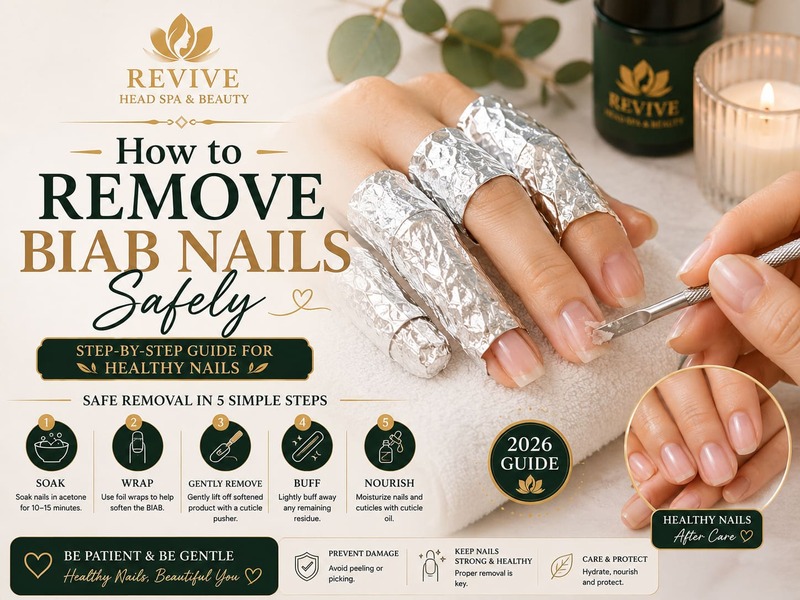
- Gently file the top layer. Using a coarse file, buff away the shiny top coat of the BIAB. You're not trying to file through the whole product, just breaking the sealed surface so acetone can penetrate more effectively. Stop once the surface looks matte rather than glossy.
- Soak cotton pads in acetone. Saturate a small cotton ball or pad with pure acetone for each nail.
- Wrap each nail in foil. Place the soaked cotton directly on top of the nail and wrap a small square of foil around the fingertip to hold it in place and keep the acetone from evaporating too quickly.
- Wait 10 to 15 minutes. Leave the foil wraps on for at least ten minutes. Thicker or more layered BIAB may need closer to fifteen.
- Gently push, don't scrape. Remove one foil wrap at a time and use a cuticle stick to gently push away the softened product. It should slide off with light pressure. If it's not lifting easily, rewrap and soak for a few more minutes rather than forcing it.
- Buff smooth. Once all the product is off, gently buff the nail surface to smooth out any residue, then stop.
- Moisturise immediately. Acetone is drying, so apply cuticle oil and a rich hand cream straight away to rehydrate the nail and surrounding skin.
The most important part of this whole process is patience during step five. If the product isn't coming away easily, the answer is always more soaking time, never more scraping pressure.
Signs Your Nails Need a Break After Removal
Once your BIAB is off, take a moment to look at the condition of your natural nails. Some thinning, dryness or ridging is fairly normal after a few consecutive sets, especially if fills were slightly overdue at any point. If your nails feel notably weak, flexible or you notice white patches, it's worth giving them a short break before your next set to let them recover, along with a course of nourishing cuticle oil and, if needed, a strengthening treatment.
On the other hand, if your nails look and feel healthy after removal with no unusual thinning, there's no harm in going straight into a fresh set, provided your aftercare routine has been solid. For tips on keeping your nails in the best possible condition between appointments, our guide on BIAB aftercare and how to make it last covers the daily habits that support healthy nails throughout the life of a set.
Common Mistakes to Avoid
Picking or peeling is by far the most damaging mistake people make, and it's often done out of frustration when a lifted edge starts catching on things. It's tempting to just pull it off, but this almost always takes healthy nail layers with it. If you notice lifting before you're ready for a full removal, it's better to book a quick repair than to pick at it yourself.
Advertisement · Scroll to continue
Using an acetone-free remover is another common misstep. Acetone-free formulas are designed for regular nail polish and simply aren't strong enough to break down BIAB, which leads to excessive filing in an attempt to compensate, and that filing is what damages the natural nail.
Over-filing during the soak-off process is worth calling out on its own. The goal of filing at the start is only to break the glossy seal, not to file away the bulk of the product. If you find yourself filing for more than thirty seconds or so before wrapping with acetone, you're likely removing more of the natural nail underneath than intended.
Should You Remove BIAB at Home or In-Salon?
A professional removal is generally the safer option, particularly if you're not confident with the process, if there's been any lifting, or if you're planning to go straight into a new set anyway. Salons also have access to professional-grade acetone and tools designed specifically for this, along with the experience to judge exactly how long each nail needs to soak.
If you do choose to remove BIAB at home, following the steps above closely and prioritising patience over speed will give you the best result. Just be mindful that repeated at-home removals done hastily are one of the more common causes of long-term nail thinning that clients later want addressed.
Comparing Removal Across Different Nail Systems
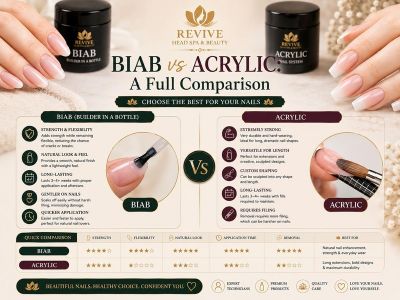
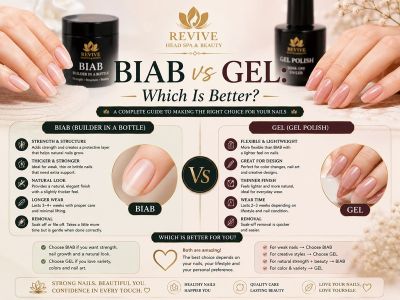
If you've worn acrylics or gel in the past, you might expect a similar removal experience, but there are some differences worth knowing. Our comparison guides on BIAB versus gel nails and BIAB versus acrylic nails both touch on how removal differs between these systems, which is a useful factor to weigh up if you're deciding what to switch to next.
Understanding how BIAB is structured also helps explain why removal takes the approach it does. Our article on how a BIAB overlay actually works breaks down the layers involved and why acetone soak-off is the only method that removes the product without damaging the nail underneath.
Prefer a Professional Removal? Visit Revive – Head Spa & Beauty
If you're in Adelaide and would rather leave the removal process to experienced hands, Revive – Head Spa & Beauty at 103B Jetty Road, Glenelg SA 5045 offers safe BIAB removal and reapplication, along with their full range of head spa and beauty services. A gentle, professional soak-off protects your natural nails and gets you ready for your next set without unnecessary damage.
Explore Our ServicesIf you're weighing up the ongoing cost of removals and fills alongside your initial set, our BIAB nails cost guide outlines typical pricing across full sets, fills and removals, which can help you plan your next few appointments. And if you haven't decided whether BIAB is worth switching to in the first place, our piece on the benefits of BIAB nails covers what makes it such a popular option for long-lasting, natural-looking nails.
Frequently Asked Questions
Q: Can I remove BIAB nails without acetone?
A: Not safely. BIAB bonds closely to the natural nail, and acetone is the only reliable way to break down the product without picking or filing off layers of the nail underneath.
Q: How long does it take to soak off BIAB nails?
A: Most nails take around 10 to 15 minutes of foil-wrapped acetone soaking, though thicker sets or nails with multiple fill layers may take a little longer.
Advertisement · Scroll to continue
Q: Will removing BIAB damage my natural nails?
A: A proper acetone soak-off shouldn't cause significant damage. Damage typically comes from picking, peeling, or excessive filing rather than the removal method itself when it's done correctly.
Q: Can I go straight from a BIAB removal into a new set?
A: Yes, as long as your natural nails look and feel healthy after removal. If you notice thinning, dryness or ridging, it's worth giving your nails a short break to recover first.
Q: Is it cheaper to remove BIAB at home or at a salon?
A: Home removal saves on the cost of a salon visit, but a professional removal reduces the risk of nail damage, which can end up costing more time and money to repair in the long run.
Final Thoughts
Removing BIAB safely comes down to one simple principle: let the acetone do the work, not your fingernails or a metal tool. Filing to break the seal, soaking with foil-wrapped acetone, and gently pushing away softened product rather than scraping or picking will protect your natural nails and keep them in good shape for your next set. If in doubt, or if it's been a while since your BIAB was last touched up, a professional removal is a small investment that protects the health of your nails long term.
Pairing a careful removal with a solid aftercare routine throughout the life of your set is really the full picture when it comes to getting the most out of BIAB, both in terms of how long it lasts and how your natural nails hold up over repeated sets.