What Are BIAB Nails? The Complete Guide to Builder in a Bottle (2026)
If you have scrolled past nail salon menus lately, chances are you have seen "BIAB" listed alongside gel and acrylic. It is one of the fastest-growing nail services of the past few years, and for good reason. BIAB, short for Builder in a Bottle, has become the go-to option for people who want strong, natural-looking nails without the damage that sometimes comes with traditional enhancements.
This guide is your starting point for understanding everything about BIAB nails: what the product actually is, how the application works, who it suits best, and how it stacks up against gel polish and acrylic. Think of this as the hub for our entire BIAB series — every specific topic, from cost to aftercare to removal, links out from here so you can dig as deep as you like.
Whether you are completely new to BIAB or you have had it done once and want to understand the process better before your next appointment, this article will walk you through the essentials in plain, practical language.
What Is BIAB?
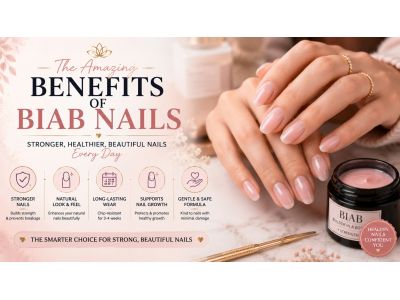
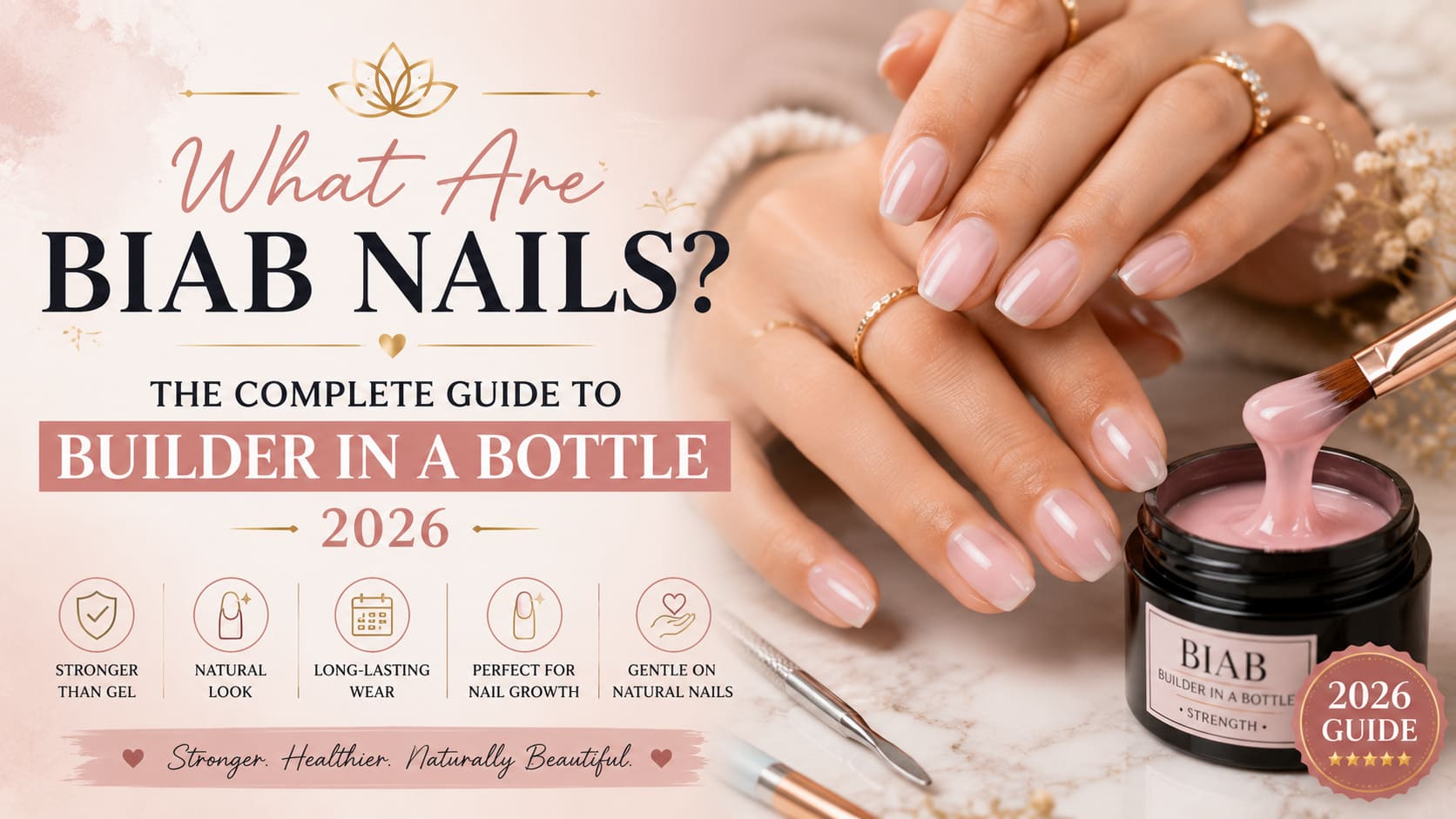
BIAB stands for Builder in a Bottle. It is a soak-off gel product, but a thicker and stronger one than a standard gel polish. The formula is designed to "build" a protective, flexible layer over the natural nail, which is where the name comes from. Unlike acrylic, there is no powder or liquid monomer involved. It is simply a pigmented builder gel applied with a brush, then cured under an LED or UV lamp, layer by layer.
The result sits somewhere between a gel manicure and an acrylic overlay. It has more structure and durability than ordinary gel polish, but it feels lighter and more natural than acrylic. Many nail technicians describe BIAB as a hybrid product because it borrows strengths from both worlds without some of their common downsides.
Advertisement · Scroll to continue
BIAB can be used in two main ways. It can be applied directly over the natural nail as an overlay to strengthen and protect it, or it can be used to add length with the help of nail forms or tips, similar to how acrylic extensions are built. We cover this distinction in more detail in our dedicated guide on BIAB overlay.
How BIAB Is Applied
A typical BIAB appointment starts much like a gel manicure. The natural nail is shaped, the cuticle is tidied, and the surface is lightly buffed to help the product adhere. A bonding primer is usually applied next, followed by several thin layers of the builder gel itself, each one cured under a lamp before the next is added.
What makes BIAB distinctive is the way the technician builds structure into the nail as they work, particularly around the stress point near the cuticle and the free edge. This is what gives BIAB its reputation for strength, even though the finished nail still looks slim and natural rather than bulky.
Once the layers are cured, the nail is shaped, buffed to a smooth finish, and topped with either a glossy or matte finish depending on preference. The whole process generally takes a similar amount of time to a full set of gel nails, though it can run slightly longer if length is being added.
In This Guide: Explore the Full BIAB Series
Who Is BIAB Best For?
BIAB tends to work particularly well for people whose natural nails are weak, thin, or prone to peeling and breaking. Because the product bonds closely to the nail plate and flexes with it, it offers protection without the rigidity that can sometimes cause lifting or breakage with acrylic.
It also suits anyone transitioning away from acrylic who still wants some added strength while their natural nails recover. People who simply want their gel manicure to last longer between appointments often move to BIAB for that reason alone, since it typically holds up for three to four weeks with proper care.
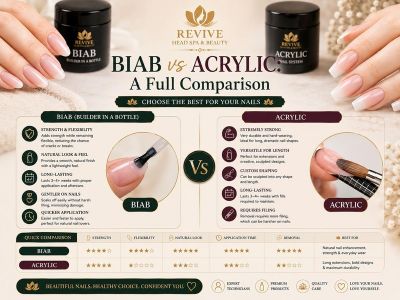
On the other hand, if you are chasing dramatic length well beyond your natural nail, acrylic or hard gel extensions may still be the more suitable choice, since they are built specifically for that kind of structural extension. Our comparison guides on BIAB vs gel and BIAB vs acrylic go into this in far more detail.
BIAB vs Gel vs Acrylic: A Quick Snapshot
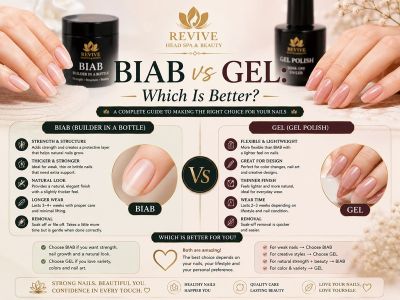
Before you decide which nail service is right for you, it helps to see the three most common options side by side. This is a general overview — for the full breakdown, including price and removal differences, visit our dedicated comparison articles linked below the table.
Advertisement · Scroll to continue
| Feature | BIAB | Gel Polish | Acrylic |
|---|---|---|---|
| Strength | High | Moderate | Very high |
| Natural feel | Light and flexible | Very light | Firmer, can feel heavier |
| Best for length | Moderate extensions | Not designed for length | Significant length |
| Typical wear time | 3–4 weeks | 1–2 weeks | 3–4 weeks |
| Odour during application | Minimal | Minimal | Noticeable |
As you can see, BIAB sits in a comfortable middle ground. It is not trying to replace acrylic for dramatic length, and it is not just a slightly stronger gel polish either. It is its own category, built around the idea of protecting and strengthening the natural nail while still looking refined.
Is BIAB Bad for Your Nails?
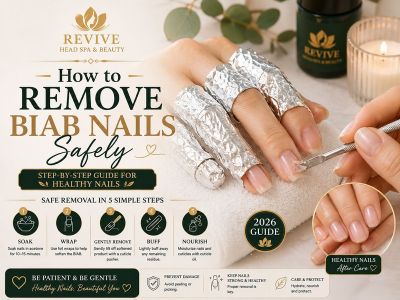
One of the most common questions people ask before trying BIAB is whether it will damage their natural nails. Generally speaking, BIAB is considered one of the gentler options available, provided it is applied and removed correctly by a trained technician. The soak-off removal process, done properly, is far less abrasive than filing off acrylic.
Where damage tends to occur is not from the product itself but from incorrect removal, such as picking or prying the product off rather than soaking it. This is why we have written a full, detailed guide on how to remove BIAB nails safely, because the removal step matters just as much as the application.
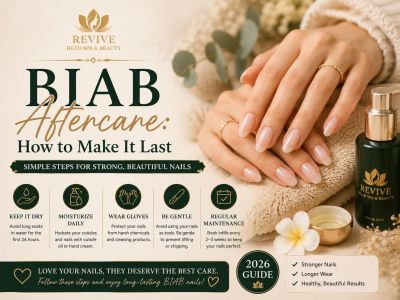
Proper aftercare in between appointments also plays a big role in how healthy your nails stay over time. Simple habits like regular cuticle oil and avoiding using your nails as tools can make a noticeable difference. We cover this in full in our BIAB aftercare guide.
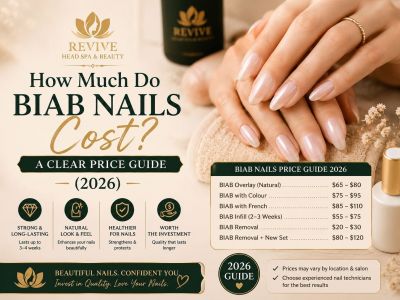
How Much Does BIAB Cost?
Pricing for BIAB varies depending on where you go, whether you are having an overlay on your natural nails or a full set with added length, and whether you want extras like nail art. In general, BIAB tends to sit in a similar price bracket to gel extensions, sometimes slightly higher due to the additional technique and time involved in building the layers correctly.
Rather than guess at numbers here, we have put together a dedicated breakdown covering typical price ranges and what affects the cost in our BIAB nails cost guide, so you can budget accurately before booking.
Curious About BIAB? Visit Revive – Head Spa & Beauty
If you are based in or visiting South Australia, Revive – Head Spa & Beauty at 103B Jetty Road, Glenelg SA 5045 offers BIAB alongside a relaxing range of nail, scalp and beauty treatments. It is a lovely option if you would rather combine your nail appointment with some proper downtime. Read more in our guide to BIAB nails at Revive.
Explore Our ServicesBIAB Overlay vs BIAB Extensions
Not everyone realises BIAB can be used two different ways. As an overlay, it is applied directly over your natural nail with no added length, simply to add strength, shape and a polished finish. As an extension, a nail form or tip is used first to build out length, with BIAB gel layered over the top for structure.
Choosing between the two really comes down to what you are after. If your natural nails are in reasonably good shape and you just want them stronger and smoother, an overlay is usually the simpler and more affordable route. If you are after extra length, the extension method is worth discussing with your technician. Our full explainer on BIAB overlay unpacks this in more detail.
Caring For BIAB Between Appointments
Like any nail enhancement, how long BIAB lasts and how healthy your nails stay underneath depends heavily on aftercare. Keeping cuticles moisturised, wearing gloves for cleaning or gardening, and avoiding using your nails to open cans or peel labels all go a long way toward extending the life of your set.
It is also worth booking in for a fill or reapplication before the product grows out too far, rather than waiting until lifting or cracking occurs. Most people find a three to four week rhythm works well, though this can vary depending on how quickly your natural nails grow. For the complete rundown, our BIAB aftercare guide covers day-by-day care tips in detail.
If you are also into nail health more broadly, you might enjoy our roundup of the top nail treatments of 2026, which looks at strengthening options beyond just BIAB.
Advertisement · Scroll to continue
Frequently Asked Questions
Q: Is BIAB the same as gel nails?
A: Not quite. BIAB is a thicker, stronger type of builder gel designed to add structure and protection, while standard gel polish is thinner and mainly used for colour and shine without the same reinforcing strength.
Q: How long do BIAB nails usually last?
A: Most people get three to four weeks out of a set before needing a fill or fresh application, though this depends on your natural nail growth and how well you look after them in between.
Q: Can BIAB be used on very short or damaged nails?
A: Yes, this is actually one of BIAB's most popular uses. Many people choose it specifically to help strengthen and protect weak or damaged nails while they grow out.
Q: Does BIAB ruin your natural nails?
A: When applied and removed correctly, BIAB is considered gentle on the natural nail. Most damage associated with BIAB actually comes from picking it off rather than soaking it off properly.
Q: Can I get BIAB removed and reapplied at the same appointment?
A: Yes, this is standard practice at most salons. The old product is soaked off, the nail is prepped again, and a fresh set of BIAB is applied in the same visit.
Final Thoughts
BIAB has earned its popularity for good reason. It offers a practical middle ground between the strength of acrylic and the natural feel of gel, making it a versatile option whether you want a simple overlay or a full set with added length. Understanding how it works, what it costs, and how to look after it properly will help you get the most out of every appointment.
Use the links throughout this guide to explore each part of the BIAB journey in more depth, from cost and aftercare through to removal and how it compares with other popular nail services. And if you are ever in Glenelg, feel free to drop by Revive – Head Spa & Beauty to see what BIAB looks and feels like in person.